
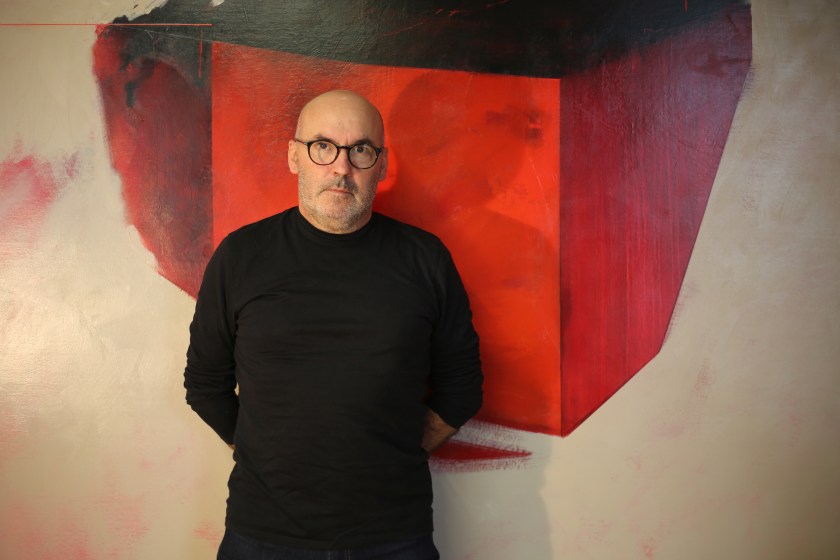
Fernando Gaspar is seen as a self-taught visual artist. Born in 1966 in Portugal, he began his journey through the drawing and practice of watercolor. Fully dedicated to the activity since 1986, the year in which it began to participate in shows and prizes, and to exhibit regularly in the main art galleries of the country, exploring and adopting other supports, materials and techniques, he had his first solo exhibition outside Portugal took in 1995.
There have been some National Prizes, collective participations and more than 50 solo exhibitions in Portugal and abroad. Over the years, the plasticity of Fernando Gaspar’s work has evolved towards an increasingly reflective and contemporary approach. So far, there are more than sixty solo exhibitions, some National Awards and representations in public and private collections in Portugal, Spain, France, Netherlands, Belgium, United Kingdom, Denmark, Sweden, Italy, Canada, Brazil and United States.
Fernando Gaspard has seen his works evolved towards an increasingly reflexive and contemporary approach , strongly marked by an assumed independence from current trends.

- Do you consider yourself as a figure of contemporary art ?
Fernando Gaspar : The echo of our work is felt at a distance and with a clarity never before experienced. It is natural, therefore, that the influence triggered by this work attracts the attention and interest of many people in places, circumstances, and moments that elude us. However, this does not guarantee a prominent position or the status of a “figure” in anything; instead, it allows, alongside personal work, dedication, and the honesty with which one works, for means to be made available to facilitate the knowledge, appreciation, and interest in my work. As a result, its importance becomes increasingly visible to a growing audience.

2. How would you describe your style ?
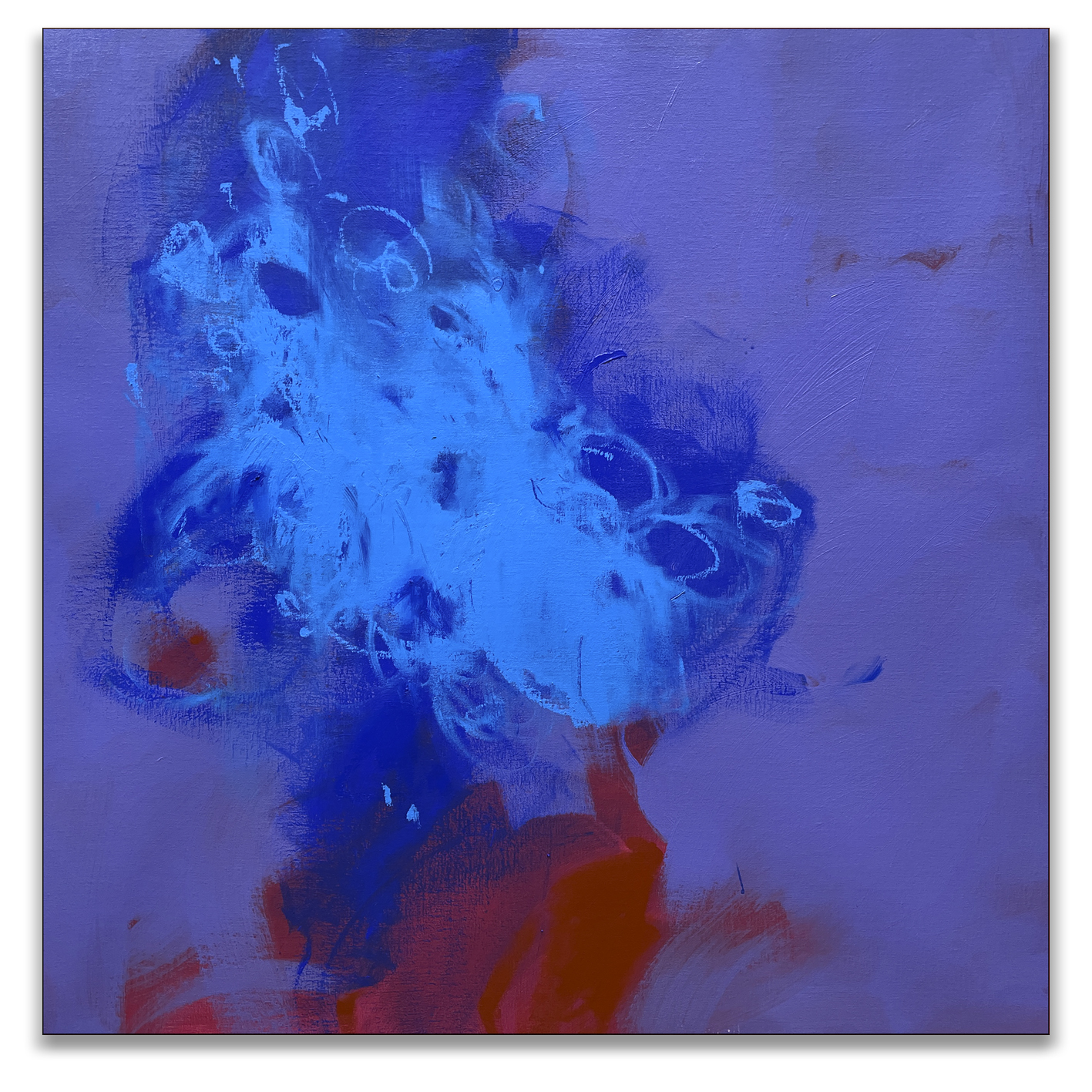
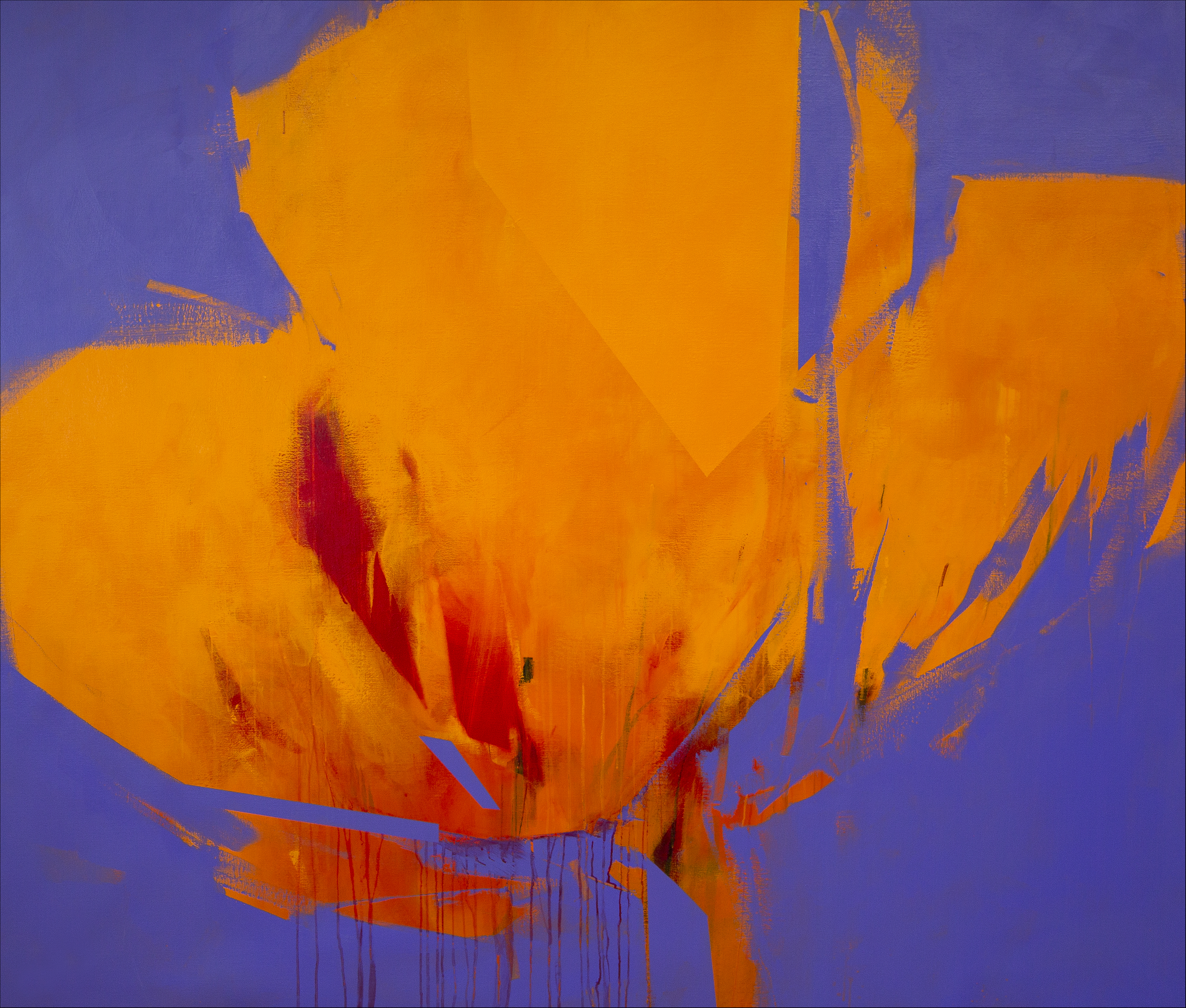
Fernando Gaspar : I am particularly interested in cities as a theme. Over time, my painting evolved into abstraction and contemplation of our time. I explore issues related to humanity, how we act upon ourselves and others, how we shape territories, and how history repeats itself. In recent years, my painting has delved more into color and scale. It has become more expressive and vibrant, characterized by large patches and strong brushwork.

3. Do you remember your first contact with art ?
Fernando Gaspar : In the house where I was born, there was always painting, thanks to my grandfather and father who were painters as a hobby. There were always paints, canvases, and papers. We visited exhibitions and traveled to museums. It’s really difficult to remember the very first time I had contact with art, but it was definitely during my early years in life.

4. What led you to painting ?
Fernando Gaspar : All the circumstances that surrounded my childhood regarding the contact with art were decisive for me to realize that it would be my territory of action. What I wanted to do, what provided me with the best understanding of the world and of myself, was always very clear to me. Artistic creation was always my first and only choice. Painting, being my primary form of expression, is a result of those early times and that primordial contact.


5. How did you learn your technique ?
Fernando Gaspar : The creative impulse and a tremendous need for independence and freedom traced the first lines of my journey. In a still early time of formal academic decisions, I chose to forge my own alternative path of self-discovery. My education in this field is the result of self-teaching and the incessant pursuit of processes. I have dedicated my entire life to this search and learning. Throughout these 37 years of continuous work, I have accumulated thousands of hours of experimentation and practice.

6. To what extent have your Portuguese roots influenced your work?
Fernando Gaspar : Perhaps this geographical circumstance, the transition from a Mediterranean to an Atlantic culture, embodies a certain idea of a place like Finisterra. It’s a place that opens up to the sea and serves as a gateway and exit between geographies, cultures in search of one another, a historical site of encounters and fusions. This fact determines and constructs a poetics of dialogue, sharing, and acceptance. Perhaps that’s why creativity became a tool for me, with art being the product of this exercise in self-understanding.
7. Your practice seems independent from current trends…
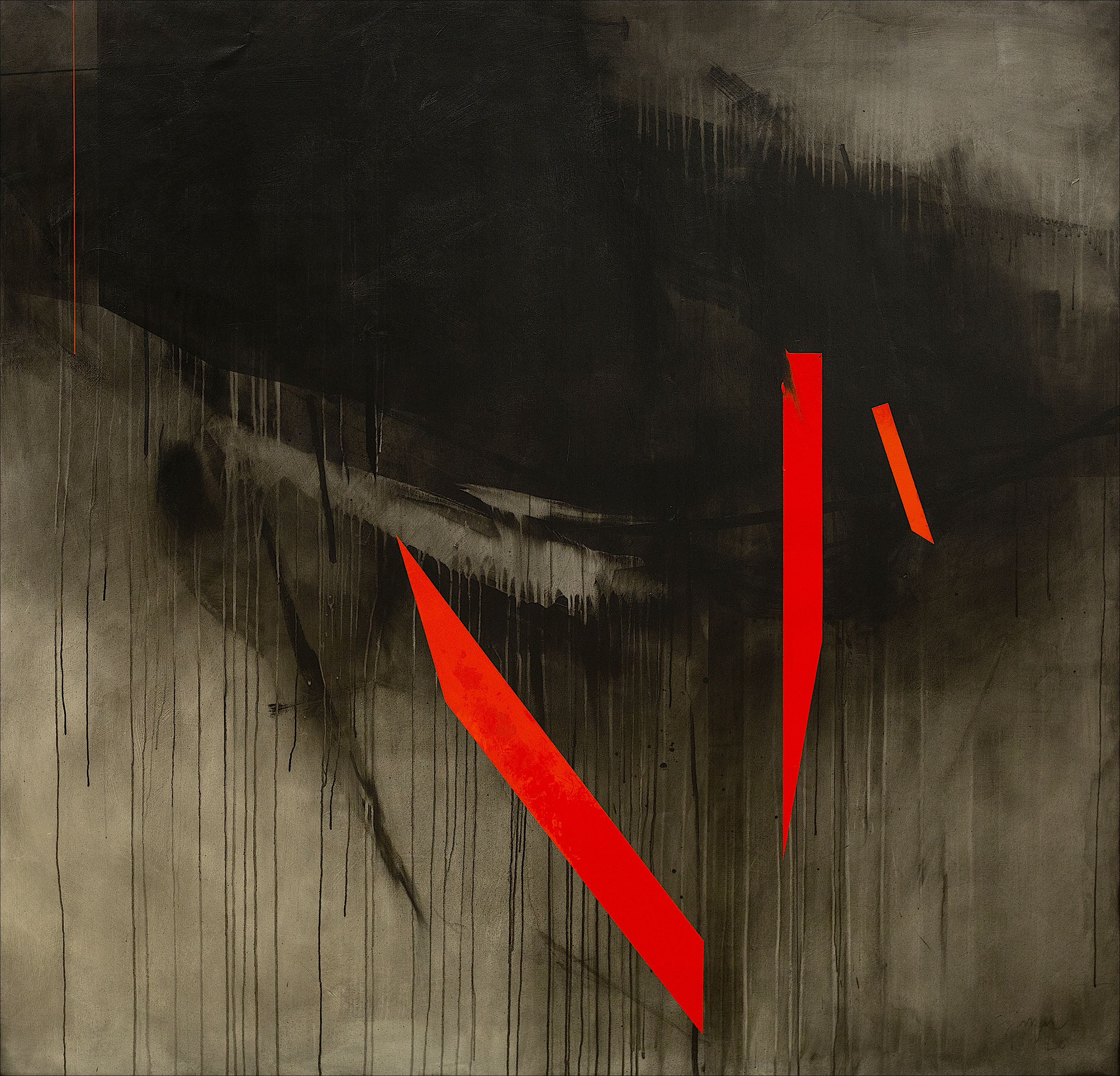
Fernando Gaspar : This independence arises from the circumstances in which my journey began and has developed over the years since then. The fact that I did not enter formal schools, follow conventional and accepted methodologies, made me, as a creative entity, a kind of lone wolf, an orphaned author with no artistic family or stylistic relatives. This circumstance marks my attitude towards my work and itself as a visible result. I have always been forging my own path—I do not follow. I have always rejected aesthetic massification and the dictatorship of taste imposed by influencers and trendsetters. I have trained myself to reject ease and frivolous trends, pyrotechnics. In art and in life.
8. Can we consider your art as a constant dialogue between the visible and the invisible ?
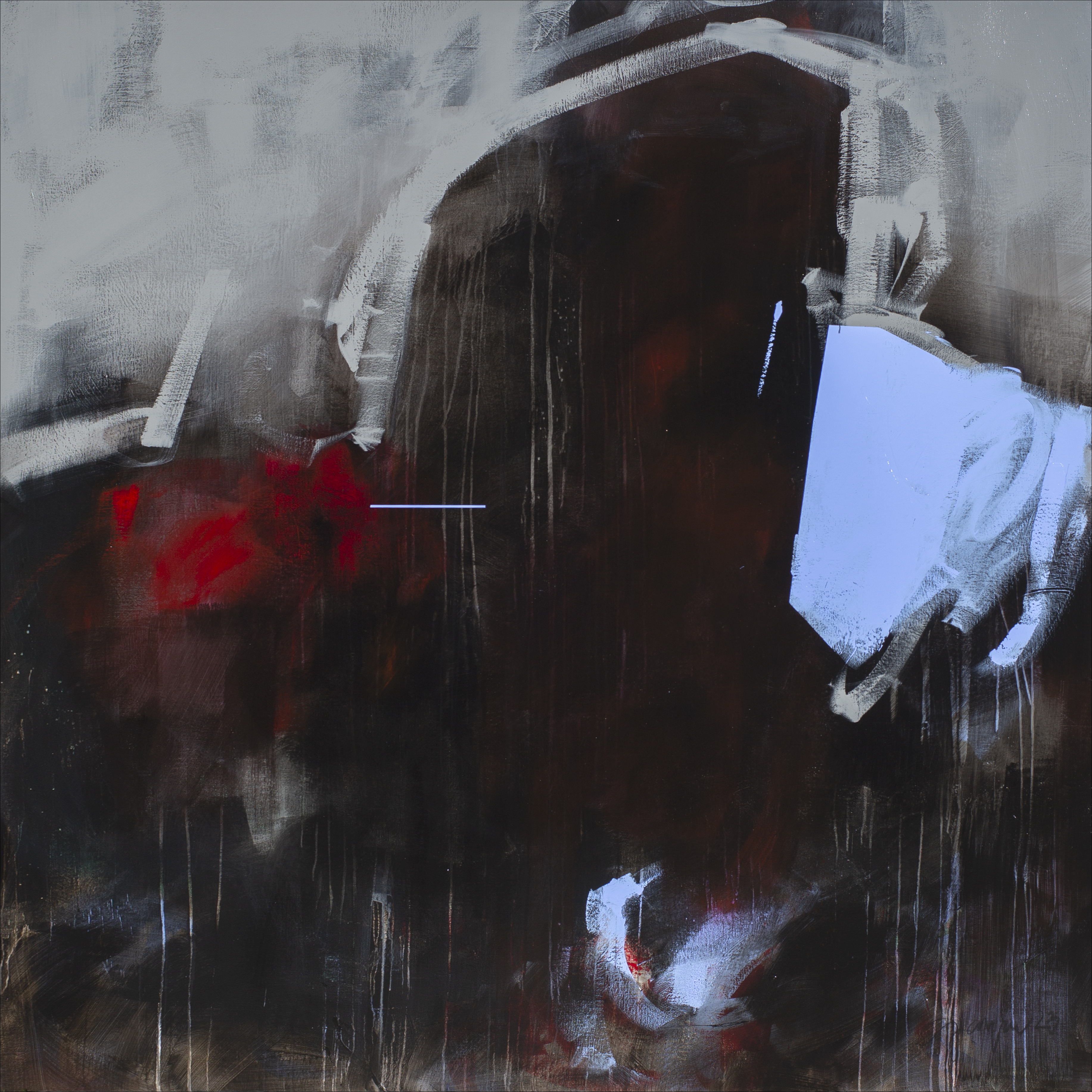
Fernando Gaspar : Increasingly so. With the experiments of the European artistic vanguard and some steps taken in science at the beginning of the 20th century, there arose an awareness that certain concepts previously considered certain and concrete were now questionable and in need of a new form of formal and theoretical “representation.” In art, abstraction provides the best response to this growing need, uniting and relating the visible and invisible dimensions of society and the world, establishing a new grammar for understanding them.
9. What does being a contemporary artist mean to you ?
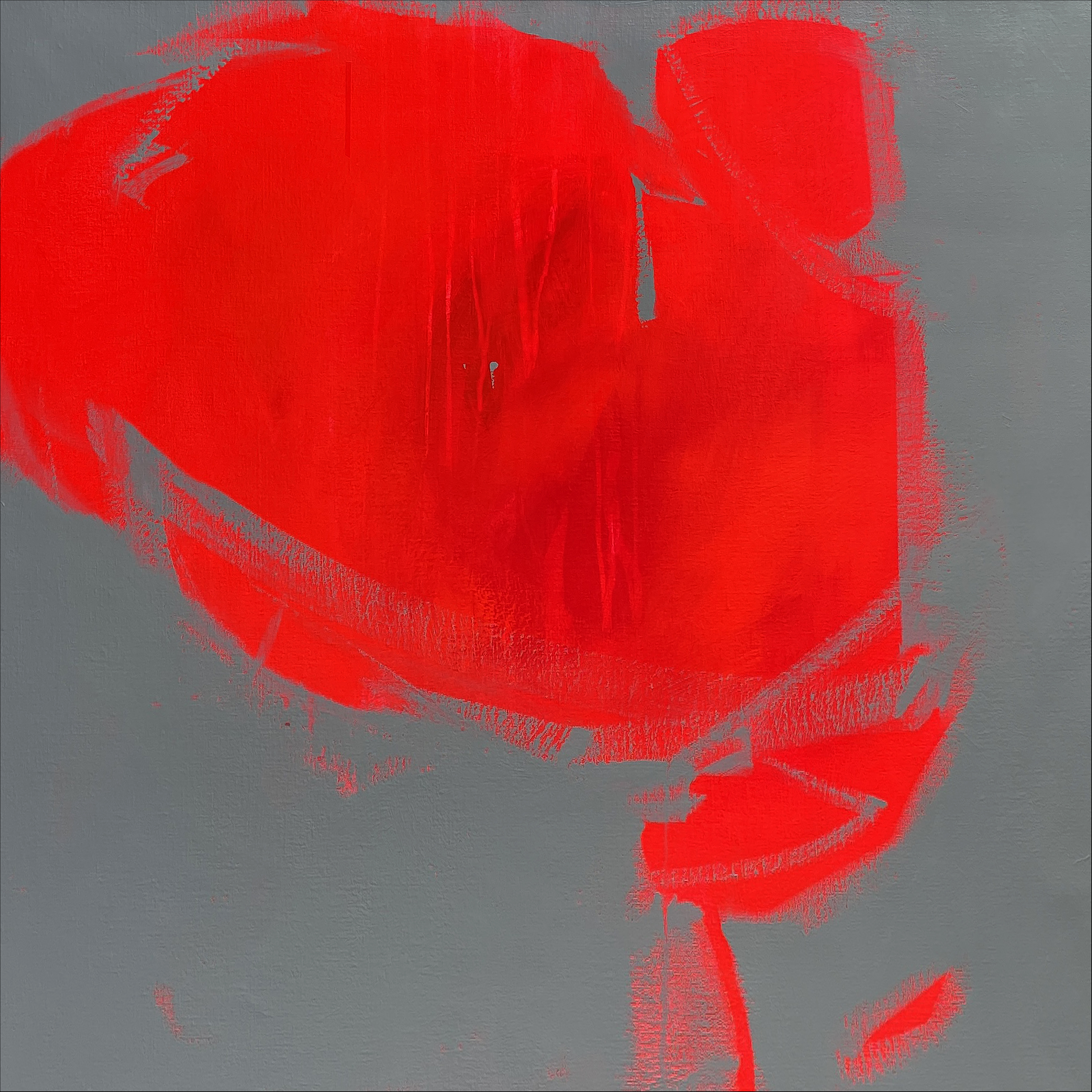
Fernando Gaspar : An artist should be an active agent, producing a discourse, defending a cause. For this, it is essential to belong to the temporal framework of one’s intervention. Only in this way can the conditions of intimacy and sensitivity necessary for the interpretation of phenomena occurring on various levels (artistic, social, political, scientific, religious, etc.) be gathered, and as an artist, one should feel compelled to make a reading of them. This reading and the distillation it produces will result in work that is more useful and plausible the more engaged and involved it is with its time. The contemporary visual artist should embody these qualities and aptitudes.

10. What inspires you ?
Fernando Gaspar : Different things at different times. I have been involved with a series for 6 or 7 years, driven by the drama of immigrants and refugees. I have worked on a series of paintings and sculptures inspired by a book. Currently, I am developing a completely different body of work; this series was clearly inspired by the forms and colors of gardens in the spring. I often say that it is always the last painting that inspires me for the next one… either because something is still missing or because I need to escape.
11. What’s your vision of our present time ?
Fernando Gaspar : This is a time of tremendous acceleration, a condition that promises to intensify. Everything is very temporary and fluid. Mutating and virtual. I acknowledge that I have some difficulty keeping up with this pace; due to my age, I have experience from other times that, although they also brought constant novelties and surprises, were at a rhythm that allowed for adaptation and readjustment. Now, the effort required for this adaptation, for the physical, mental, and even ethical processing of so many technological proposals and more, becomes greater and does not always yield the desired results. I fear that technology and its emergence will prevail over some of the values that have brought us to this point.

12. What are your future plans ?
Fernando Gaspar : I am currently involved in the filming of a documentary in the studio, something that has been ongoing since last year and has excited me greatly. I have plans to install an on-site public sculpture made of Corten steel soon; it is a piece that stands 8.5 meters tall and my first experience with this material. Then I have exhibitions coming up: a solo exhibition in September in London, another solo exhibition in Luxembourg, Portugal, and possibly China in 2024 and 2025. In the meantime, I participate in group exhibitions at the galleries that represent me and take on commissioned works.
 I K O N E S S